I know most all dance schools provide pre-ballet/creative movement programs for young children, but until recently I hadn't read research to support WHY parents should select this for their children, other than the traditional, balance, poise, social and rhythm advantages.
Recently, I attended a 4-Kindergarten session from a local school district administrator in Wisconsin. While many schools in our area now offer 4K training in the school systems, many don't. So,they are still out there trying to convince taxpayers of the long term benefits of 4K. While I was listening it occurred to me all the same benefits imply for pre-K dance training too.
The Research they shared...
A child's brain grows 75-90% of it's adult size between age of 3-5.
85% of the child's intellect, personality, and social skills are formed by age 5.
There's more, but I guess I don't need more proof. Use research information like this to ADVERTISE your program. What parent can say no to dance class when they think about it this way? It's not about dance class being a "nice to do" its a MUST do when you look at this data.
As teachers we know this intuitively, we see the children progress in the classroom quickly and we can tell the kids that are in a pre-school program from the ones who are staying at home.
Dance training like 4K schooling is an important part of the development process. Especially for kids who are not in other training programs by age 3 - dance can make a big difference.
Another key differentiator was the income of the parents, and while I agree that dance typically tends to go to children in more affluent homes, there's great opportunity for your studio to reach out to low-income families with options to get their children in the studio too. Or maybe this will motivate you to reach out with efforts to your
Showing posts with label psychology. Show all posts
Showing posts with label psychology. Show all posts
Monday, March 23, 2009


Tuesday, January 20, 2009
Experiencing the "Flow" - Create Your Happiness
Have you ever just listened to a piece of music and the dance just appeared in your mind? Maybe it was just a combination that struck you to a particular part of the refrain? I love it when that happens! It's called being in the "flow."
Over the years I've learned to wait for it. I'll listen to music that I need to choreograph for my student recital over and over again until the movement appears to me. Now, please don't stop reading because you think I'm crazy. It really does work for me. When people ask "how do you choreograph all those dances" I tell them that after awhile the dance sort of just "appears" to me. I can start to see it happen on stage, feel it as I move around and then I write it down quick. Does this happen for you?
If it does, psychologists would tell you that you are IN THE FLOW. You are linked with the moment, the motivation and the talent to make it happen and you are totally in sync with yourself. I think we all need to find more "In the flow moments."
You've heard the term "go with the flow" well this is a new look at that idea. It's probably where that catch phrase came from, now that I think of it.
Here's an excerpt from the research...There is a state that psychologist Mihaly Csikszentmihalyi writes about called flow. The Experience of Flow:
"My own addition to this list is the concept of the autotelic experience, or flow, and of the autotelic personality. The concept describes a particular kind of experience that is so engrossing and enjoyable that it becomes autotelic, that is, worth doing for its own sake even though it may have no consequence outside itself. Creative activities, music, sports, games, and religious rituals are typical sources for this kind of experience. Autotelic persons are those who have such flow experiences relatively often, regardless of what they are doing.
Of course, we never do anything purely for its own sake. Our motives are always a mixture of intrinsic and extrinsic considerations. For instance, composers may write music because they hope to sell it and pay the bills, because they want to become famous, because their self-images depends on writing songs—all of these being extrinsic motives. But if the composers are motivated only by these extrinsic rewards, they are missing an essential ingredient. In addition to these rewards, they could also enjoy writing music for its own sake—in which case, the activity would become autotelic. My studies (e.g., Csikszentmihalyi, 1975, 1996, 1997) have suggested that happiness depends on whether a person is able to derive flow from whatever he or she does.
A brief selection from one of the more than 10,000 interviews collected from around the world might provide a sense of what the flow experience is like. Asked how it felt when writing music was going well, a composer responded,
You are in an ecstatic state to such a point that you feel as though you almost don't exist. I have experienced this time and time again. My hand seems devoid of myself, and I have nothing to do with what is happening. I just sit there watching in a state of awe and wonderment. And the music just flows out by itself. (Csikszentmihalyi, 1975, p. 44)
This response is quite typical of most descriptions of how people feel when they are thoroughly involved in something that is enjoyable and meaningful to the person. First of all, the experience is described as “ecstatic”: in other words, as being somehow separate from the routines of everyday life. This sense of having stepped into a different reality can be induced by environmental cues, such as walking into a sport event, a religious ceremony, or a musical performance, or the feeling can be produced internally, by focusing attention on a set of stimuli with their own rules, such as the composition of music.
If you are still reading, Congratulations! You made it through a college course on flow. It's a bit of a tough read, but its interesting and note how old the research is...this is not new stuff. I bet I was in pre-ballet class when this research was written.
So, go find your flow! I bet it's some place with music and an empty stage nearby...
Over the years I've learned to wait for it. I'll listen to music that I need to choreograph for my student recital over and over again until the movement appears to me. Now, please don't stop reading because you think I'm crazy. It really does work for me. When people ask "how do you choreograph all those dances" I tell them that after awhile the dance sort of just "appears" to me. I can start to see it happen on stage, feel it as I move around and then I write it down quick. Does this happen for you?
If it does, psychologists would tell you that you are IN THE FLOW. You are linked with the moment, the motivation and the talent to make it happen and you are totally in sync with yourself. I think we all need to find more "In the flow moments."
You've heard the term "go with the flow" well this is a new look at that idea. It's probably where that catch phrase came from, now that I think of it.
Here's an excerpt from the research...There is a state that psychologist Mihaly Csikszentmihalyi writes about called flow. The Experience of Flow:
"My own addition to this list is the concept of the autotelic experience, or flow, and of the autotelic personality. The concept describes a particular kind of experience that is so engrossing and enjoyable that it becomes autotelic, that is, worth doing for its own sake even though it may have no consequence outside itself. Creative activities, music, sports, games, and religious rituals are typical sources for this kind of experience. Autotelic persons are those who have such flow experiences relatively often, regardless of what they are doing.
Of course, we never do anything purely for its own sake. Our motives are always a mixture of intrinsic and extrinsic considerations. For instance, composers may write music because they hope to sell it and pay the bills, because they want to become famous, because their self-images depends on writing songs—all of these being extrinsic motives. But if the composers are motivated only by these extrinsic rewards, they are missing an essential ingredient. In addition to these rewards, they could also enjoy writing music for its own sake—in which case, the activity would become autotelic. My studies (e.g., Csikszentmihalyi, 1975, 1996, 1997) have suggested that happiness depends on whether a person is able to derive flow from whatever he or she does.
A brief selection from one of the more than 10,000 interviews collected from around the world might provide a sense of what the flow experience is like. Asked how it felt when writing music was going well, a composer responded,
You are in an ecstatic state to such a point that you feel as though you almost don't exist. I have experienced this time and time again. My hand seems devoid of myself, and I have nothing to do with what is happening. I just sit there watching in a state of awe and wonderment. And the music just flows out by itself. (Csikszentmihalyi, 1975, p. 44)
This response is quite typical of most descriptions of how people feel when they are thoroughly involved in something that is enjoyable and meaningful to the person. First of all, the experience is described as “ecstatic”: in other words, as being somehow separate from the routines of everyday life. This sense of having stepped into a different reality can be induced by environmental cues, such as walking into a sport event, a religious ceremony, or a musical performance, or the feeling can be produced internally, by focusing attention on a set of stimuli with their own rules, such as the composition of music.
If you are still reading, Congratulations! You made it through a college course on flow. It's a bit of a tough read, but its interesting and note how old the research is...this is not new stuff. I bet I was in pre-ballet class when this research was written.
So, go find your flow! I bet it's some place with music and an empty stage nearby...
Thursday, January 8, 2009
What's in a name? Taking Attendance a new way
After reading the most recent issue of Dance Studio Life from Rhee Gold I was inspired to find a more fun and interesting way to take attendance. We've always sat in circle in the youngest classes and I've called their names off. Mostly I do it so I can remember thier names... little do they know. But the article I read talked about how taking attendance is important so the dancer learns responsibility to come to class etc. and it encouraged teachers to make a big deal about taking attendance.
So, I began thinking on my drive to the studio, "What could I do to make it more fun?" When I arrived I pulled out a 99 cent princess wand out of my trusty, secret closet and wall-a instant fun... well almost. I decided to have the kids pass the wand around the circle and they could say "My name is ...." and it was fun! Not only did it get each childs voice heard during the class it gave them an additional public speaking opportunity! It really brought out thier personalities too, which in just a few short seconds is enlightening. Some look egar and take it really seriously, some say thier name in one big motion as they try to get rid of wand and limelight as quickly as possible. And I had 2 girls that night who gladly grabbed that wand and then FROZE! They couldn't say thier own name. Now, for me that's great to know. I will focus on getting those girls comfortable saying thier name in a few weeks. I'm always up for a challenge.
In tap class they stated thier name and gave me three shuffles. I guess we could add ballet turns or curtsies to ballet class. The options are endless.
If you have ideas that have worked for you please share them with us.
So, I began thinking on my drive to the studio, "What could I do to make it more fun?" When I arrived I pulled out a 99 cent princess wand out of my trusty, secret closet and wall-a instant fun... well almost. I decided to have the kids pass the wand around the circle and they could say "My name is ...." and it was fun! Not only did it get each childs voice heard during the class it gave them an additional public speaking opportunity! It really brought out thier personalities too, which in just a few short seconds is enlightening. Some look egar and take it really seriously, some say thier name in one big motion as they try to get rid of wand and limelight as quickly as possible. And I had 2 girls that night who gladly grabbed that wand and then FROZE! They couldn't say thier own name. Now, for me that's great to know. I will focus on getting those girls comfortable saying thier name in a few weeks. I'm always up for a challenge.
In tap class they stated thier name and gave me three shuffles. I guess we could add ballet turns or curtsies to ballet class. The options are endless.
If you have ideas that have worked for you please share them with us.
Wednesday, November 26, 2008
Thank you for being my student
So often we forget to give thanks to our real customers. Sure we say "thank you for being our customer" to the parents, after all they pay the bills. But when was the last time you really showed gratitude to your students just for giving you the chance to be their dance teacher?
Thank you for coming to class and for wanting to learn.
Thank you for making me be a better teacher.
Thank you for making me exercise each week.
Thank you for making me laugh.
Thank you for accepting my love of dance as a gift - from me to you.
Thank you for wanting to be a dancer.
Thank you for being so cute in your little pink outfit.
Thank you for thinking I'm your hero, when in truth I'm just a normal person.
Let's take this Thanksgiving opportunity to remember to thank the students in our lives for making us dance teachers. I wonder... just who would we be without any students?
As one of my favorite inpirational books "The Secret" says, Gratitude is the most powerful feeling there is.
Thank you for coming to class and for wanting to learn.
Thank you for making me be a better teacher.
Thank you for making me exercise each week.
Thank you for making me laugh.
Thank you for accepting my love of dance as a gift - from me to you.
Thank you for wanting to be a dancer.
Thank you for being so cute in your little pink outfit.
Thank you for thinking I'm your hero, when in truth I'm just a normal person.
Let's take this Thanksgiving opportunity to remember to thank the students in our lives for making us dance teachers. I wonder... just who would we be without any students?
As one of my favorite inpirational books "The Secret" says, Gratitude is the most powerful feeling there is.
Friday, November 21, 2008
Just in case you missed this article
This article is what landed me the opportunity to help write the new American Girl book "Dance!" - thought I'd share it with you in case you missed it.
Use the power of positive psychology to differentiate your school.
Written by: DeAnne Boegli, owner BHF Dance Academy and Releve’ LLC. Published in Dance Studio Life Magazine, August 2007
Recently, positive psychology stories have been hitting the news and bookshelves. Positive psychology experts recommend thinking positive thoughts to get a positive outcome. Some take this to the extreme saying they can imagine a parking spot and get it. But in general, this is not a new concept. Motivational speakers have been pitching the power of positive thinking to their audiences for years, so why now is it getting mainstream attention?
Positive attitudes can make a difference between struggling with a challenge and tackling it head on. If we are not confident we can not make good things happen. Adapting to change takes confidence and we live in a world of change. So today more than ever we need to think positive.
How does this impact dance teachers?
We’ve been teaching self-confidence for years. We tackle the world’s greatest fear -- public performance or public speaking every year, recital after recital. As a dance teacher, I’ve always prided myself in preparing young students for their first stage performance. That first exposure is critical to long term success. Training students to feel the adrenaline rush rather than the fear is what is so important. What a huge gift we give to our students -- freedom from fear. And the ability to use that “rush” to perform to the best of their abilities. After a positive stage experience self-confidence starts to grow and they can’t wait to get back up there.
In college I majored in psychology and journalism at the University of Wisconsin. My goal was to become a public relations professional. I’ve accomplished my goals. I’m still active in the profession and enjoy it daily. But along the way I found a need to listen to my creative voice, so I started a dance school in our small town in Brodhead, Wis. I wanted my daughters to have all of the gifts dancing provided to me. (thank you Ms. Ginger) And a school was born.
At my school we are all about teaching self-confidence. It’s my single goal. Our tag line is “Life is a Stage. Start Dancing™.” And I mean this. I want to raise confident young students with great attitudes. Sure, if we grow some amazing dancers along the way I’ll consider it a great success, but it won’t be my crowning achievement. Seeing a successful person with exceptional confidence in everyday life will be my reward.
Each class we put a twist on the Reverence tradition. We state our Reverence verbally. And through the years the kids have added their own choreography to it from time to time. We say at the end of each class… “I’m Smart. I’m Strong and I Love to Dance!™.” For five years my students have been repeating this and they believe it. (And so do their parents.) Go ahead; say it to yourself out loud.
“I’m Smart. I’m Strong and I Love to Dance.” Doesn’t that make you feel good? That is positive psychology in the works. Repetitive self-affirmation is good for your soul.
At first, I had young girls who couldn't say it because they didn’t believe it. I would have them stand in front of the mirror and tell themselves “I’m Smart. I’m Strong and I Love to Dance.” Some couldn't look themselves in the eye. It was a sad moment for me, but it made me even more dedicated to this activity with the students. If no one else in their life was going to tell them they were smart and strong then I certainly wanted to teach them how to tell it to themselves.
I had a good laugh when the senior class took some artistic license to our statement. They chanted “I’m hot, I’m tired and I want to go home” with a few giggles. I had to admire their creativity, I was tired too.
Before each recital back stage while the kids are anxiously waiting, I shout “I’m going out now to open the curtain for you… let me here it!” Then young voices say in unison “I’m Smart. I’m Strong and I Love to Dance!” I get goose bumps each time. It calms the dancers down. It equalizes them. From the youngest to the oldest they all say it together. They are a team, even though some of them have never met. They are in control of their emotions. They are building self-awareness.
I had some staff that doubted this technique until they saw it in action backstage. They are believers today. And we even say it at the end of the grand finale’ of the final performance as a way to say goodbye until the next season starts.
I encourage you to find your own statement.
Say what comes naturally and fits with your teaching style. I’m confident you will find success. As it becomes part of your brand it will help you differentiate your school from competitors programs. One hint: don’t change the statement often. It’s something that you need to drill over time. Something that when they are 40 they will still remember….I’m Smart. I’m Strong and I Love to Dance!
It’s fun. Try it.
Use the power of positive psychology to differentiate your school.
Written by: DeAnne Boegli, owner BHF Dance Academy and Releve’ LLC. Published in Dance Studio Life Magazine, August 2007
Recently, positive psychology stories have been hitting the news and bookshelves. Positive psychology experts recommend thinking positive thoughts to get a positive outcome. Some take this to the extreme saying they can imagine a parking spot and get it. But in general, this is not a new concept. Motivational speakers have been pitching the power of positive thinking to their audiences for years, so why now is it getting mainstream attention?
Positive attitudes can make a difference between struggling with a challenge and tackling it head on. If we are not confident we can not make good things happen. Adapting to change takes confidence and we live in a world of change. So today more than ever we need to think positive.
How does this impact dance teachers?
We’ve been teaching self-confidence for years. We tackle the world’s greatest fear -- public performance or public speaking every year, recital after recital. As a dance teacher, I’ve always prided myself in preparing young students for their first stage performance. That first exposure is critical to long term success. Training students to feel the adrenaline rush rather than the fear is what is so important. What a huge gift we give to our students -- freedom from fear. And the ability to use that “rush” to perform to the best of their abilities. After a positive stage experience self-confidence starts to grow and they can’t wait to get back up there.
In college I majored in psychology and journalism at the University of Wisconsin. My goal was to become a public relations professional. I’ve accomplished my goals. I’m still active in the profession and enjoy it daily. But along the way I found a need to listen to my creative voice, so I started a dance school in our small town in Brodhead, Wis. I wanted my daughters to have all of the gifts dancing provided to me. (thank you Ms. Ginger) And a school was born.
At my school we are all about teaching self-confidence. It’s my single goal. Our tag line is “Life is a Stage. Start Dancing™.” And I mean this. I want to raise confident young students with great attitudes. Sure, if we grow some amazing dancers along the way I’ll consider it a great success, but it won’t be my crowning achievement. Seeing a successful person with exceptional confidence in everyday life will be my reward.
Each class we put a twist on the Reverence tradition. We state our Reverence verbally. And through the years the kids have added their own choreography to it from time to time. We say at the end of each class… “I’m Smart. I’m Strong and I Love to Dance!™.” For five years my students have been repeating this and they believe it. (And so do their parents.) Go ahead; say it to yourself out loud.
“I’m Smart. I’m Strong and I Love to Dance.” Doesn’t that make you feel good? That is positive psychology in the works. Repetitive self-affirmation is good for your soul.
At first, I had young girls who couldn't say it because they didn’t believe it. I would have them stand in front of the mirror and tell themselves “I’m Smart. I’m Strong and I Love to Dance.” Some couldn't look themselves in the eye. It was a sad moment for me, but it made me even more dedicated to this activity with the students. If no one else in their life was going to tell them they were smart and strong then I certainly wanted to teach them how to tell it to themselves.
I had a good laugh when the senior class took some artistic license to our statement. They chanted “I’m hot, I’m tired and I want to go home” with a few giggles. I had to admire their creativity, I was tired too.
Before each recital back stage while the kids are anxiously waiting, I shout “I’m going out now to open the curtain for you… let me here it!” Then young voices say in unison “I’m Smart. I’m Strong and I Love to Dance!” I get goose bumps each time. It calms the dancers down. It equalizes them. From the youngest to the oldest they all say it together. They are a team, even though some of them have never met. They are in control of their emotions. They are building self-awareness.
I had some staff that doubted this technique until they saw it in action backstage. They are believers today. And we even say it at the end of the grand finale’ of the final performance as a way to say goodbye until the next season starts.
I encourage you to find your own statement.
Say what comes naturally and fits with your teaching style. I’m confident you will find success. As it becomes part of your brand it will help you differentiate your school from competitors programs. One hint: don’t change the statement often. It’s something that you need to drill over time. Something that when they are 40 they will still remember….I’m Smart. I’m Strong and I Love to Dance!
It’s fun. Try it.
Subscribe to:
Posts (Atom)
Releve' Dance Poster sample
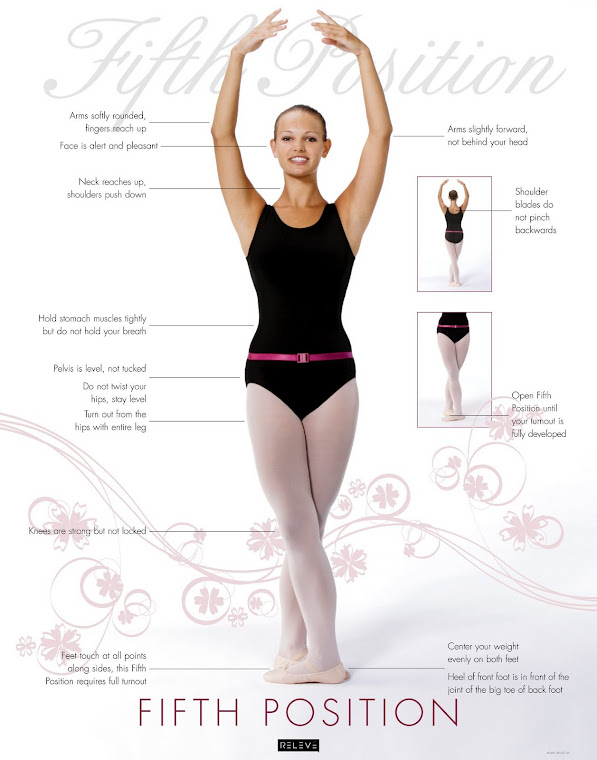
sample of poster

 Posts
Posts


